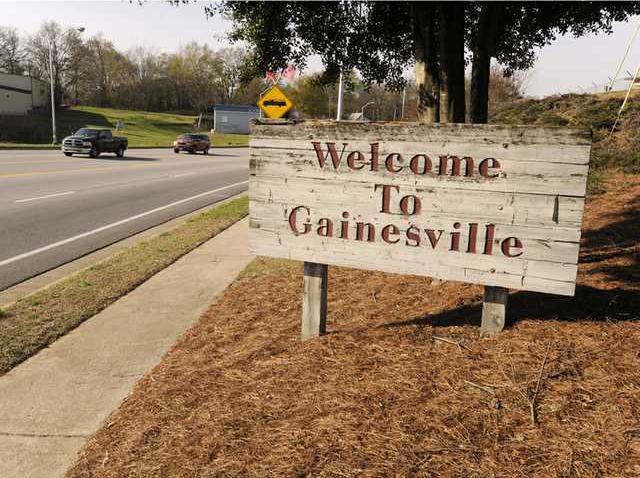
The short answer for Gainesville
Gainesville is defined by the University of Florida. Around 60,000 students in a city of roughly 145,000, plus UF Health, the Innovation District startup cluster, and a research economy that produces an unusually high concentration of technical talent for a city this size.
That shapes the crypto market in a specific way. Gainesville has plenty of first-time buyers, and their biggest financial risk is not the 15% kiosk fee on Archer Road. It is leverage, memecoins, Discord groups and the entire apparatus of the crypto industry that exists to separate inexperienced traders from small amounts of money at high velocity.
So this page front-loads the fee mechanics — they matter and they are easy — and then spends real space on the things that actually cost students money.
The local map: four layers of access
Gainesville's crypto geography is mostly a function of the campus.
The campus fringe — University Avenue, Midtown, the housing complexes along SW 13th and Archer — is where the buyers are. Machines here are priced for late-night convenience and land at 14% to 17% all-in.
The retail corridors — Archer Road through Butler Plaza, and 13th Street north of campus — carry the best-priced machines in the city because several operators compete over long commercial runs.
East Gainesville, particularly around Waldo Road, has higher kiosk density relative to population and higher fees. Bank branch coverage has historically been thinner in these neighbourhoods, and the pricing reflects competition against check-cashing rather than against exchanges.
The Innovation District near Depot Park is the genuinely interesting layer: UF spinouts, research groups and a small but real startup community. Crypto here shows up as engineering work and occasionally as token compensation, both of which have implications the average student does not need to worry about but a graduate research assistant taking a startup job absolutely does.
Buying online from a licensed exchange
The mechanics, briefly, then the part that matters.
Licence. Florida licenses money transmitters under Chapter 560 of the Florida Statutes through the Office of Financial Regulation. CEX.IO Corp holds Florida licence FT230000264 and NMLS ID 1804170; Coinbase, Kraken, Gemini, Crypto.com and Robinhood Crypto hold equivalent Florida authority. Verify free on NMLS Consumer Access. You must be eighteen to open an account at any licensed US exchange — there is no legitimate workaround, and using someone else's account creates tax and liability problems for both of you.
Product. CEX.IO from 0.16% maker / 0.25% taker; Gemini ActiveTrader 0.20%/0.40%; Kraken Pro 0.25%/0.40%. Retail buy screens cost 1% to 1.49% plus spread.
Funding. ACH is free and settles in one to three business days. Minimums run from $1 to $20, so there is no reason to save a lump sum and no reason to use an unlicensed platform because it lets you start smaller.
Then, before you deposit anything: go into account settings and disable margin, futures and any derivatives product the platform offers. Turn on an authenticator app instead of SMS two-factor. If withdrawal address allow-listing is available, enable it. Five minutes of settings will do more for your outcomes than any amount of chart-reading.
Licensed platforms Gainesville residents can use
| Exchange | FL licence | Order-book fee | Instant buy | Min. | Site |
|---|---|---|---|---|---|
| #1 CEX.IO | Yes FT230000264 | 0.16% / 0.25% | 2.99% card | $20 | cex.io ↗ |
| #2 Coinbase | Yes | 0.60% / 1.20% (Advanced) | 0.5–2% spread; card to ~3.99% | $2 | coinbase ↗ |
| #3 Kraken | Yes | 0.25% / 0.40% (Kraken Pro) | 1% + spread (simple screen) | $1 | kraken ↗ |
| #4 Gemini | Yes | 0.20% / 0.40% (ActiveTrader) | 1.49% + up to 1% convenience | $1 | gemini ↗ |
| #5 Crypto.com | Yes | From 0.25% / 0.50% | ~2.99% card | $1 | crypto ↗ |
| #6 Robinhood Crypto | Yes | No commission; spread only | Spread only | $1 | robinhood ↗ |
Schedules checked August 2026 on each operator’s public fee page. Fees change — confirm before you trade. Links are nofollow.
Buying with cash: kiosks and vouchers
Gainesville kiosks run 12% to 17% all-in. Archer Road and 13th Street are the competitive corridors; Midtown and east Gainesville price higher.
The fee is two numbers and only one is displayed. Compare the machine's quoted rate against the live spot price on your phone before you confirm — the markup inside the rate is usually a third to a half of the total.
Coinstar machines running Coinme inside local supermarkets are voucher products, not ATMs: cash in, printed code out, redeemed in the Coinme app. Coinme's own documentation describes an all-in cash exchange fee of roughly 15% to 18% depending on location, plus a 4% transaction fee.
Confirm any machine is live before travelling. Bitcoin Depot filed Chapter 11 on 18 May 2026 and shut roughly 9,700 machines nationally, about 156 in Florida. Old branding persists in North Florida convenience stores.
Operators still active: CoinFlip (roughly 270 Florida machines), Byte Federal (headquartered in Venice, Florida), Coinme via Coinstar, Athena Bitcoin (Miami headquarters), RockItCoin.
Gainesville neighbourhood breakdown
Physical crypto access in Gainesville is not evenly spread. Machine density follows cash-heavy retail, not population or income — which means the areas with the most convenient machines are frequently the areas with the worst pricing. Here is how the corridors compare.
University Avenue & Midtown
The student strip along the northern edge of campus. Bars, restaurants, convenience stores. A few machines serving late-night traffic at full retail pricing — and the highest concentration of first-time crypto buyers in North Florida.
Archer Road & Butler Plaza
The main retail corridor south of campus, and the densest kiosk stretch in the city. Several operators compete here, keeping pricing at the lower end of the local range.
13th Street (US-441)
North–south artery running through campus and out to the north side. Reasonable machine coverage plus supermarket voucher kiosks. Mid-range fees.
Waldo Road & east Gainesville
Older commercial corridor with a more cash-based customer base. Higher kiosk density and higher fees than the student and retail areas.
Innovation District & Depot Park
UF-adjacent research and startup cluster. No kiosk demand; this is where the actual technical and entrepreneurial crypto activity in Gainesville happens.
NW 39th Avenue & the north side
Suburban residential and retail. Supermarket voucher machines, few true kiosks, app-based population.
What each route actually costs
The table below prices the same $1,000 bitcoin purchase through every route available in Gainesville, using published fee schedules as at August 2026. The numbers include both the stated fee and a realistic allowance for exchange-rate markup, which is where most of the cost hides.
| Method | All-in cost on $1,000 | How fast |
|---|---|---|
| Licensed exchange, ACH + limit order | $2–$6 | 1–3 business days |
| Licensed exchange, debit card | $25–$40 | Minutes |
| Archer Road cash kiosk | $120–$170 | Under 10 minutes |
| University Avenue / Midtown kiosk | $150–$180 | Under 10 minutes |
Costs are our own modelling from published operator schedules plus observed exchange-rate markups; your machine may differ. Always read the on-screen quote before confirming.
What we see people get wrong
Here is what we would tell a UF student sitting down to buy crypto for the first time, in order of how much money it will save them.
One: do not use leverage. Not 2×, not 5×, not "just for a small position". Leveraged positions are liquidated by ordinary volatility, and crypto's ordinary volatility is extraordinary. The mathematics are not close: a leveraged retail trader in a volatile market has a near-certain expected outcome, and it is not a good one. Platforms offer it because liquidations are profitable for them. Turn it off in settings so the temptation is not there at 2am.
Two: assume every token recommendation is paid. Discord groups, Telegram channels, influencer videos, "alpha" newsletters — the overwhelming majority are either promoting something the promoter already holds or are affiliate marketing for a high-leverage exchange. This is not cynicism, it is the actual business model of crypto media.
Three: understand that every trade is a taxable event. Swapping token A for token B is a disposal of A at fair market value, federally reportable even though no dollars were involved. A student who makes two hundred small swaps has created two hundred reportable events. Exchanges began issuing Form 1099-DA for the 2026 tax year, so the IRS receives the data whether you track it or not. Fewer, larger, longer-held positions are dramatically easier to report — and on a student income, long-term gains may fall in the 0% federal bracket, which is a genuine and underused reason to hold for more than a year.
Four: never accept a "job" that involves receiving and forwarding crypto. This is money laundering, it is aggressively recruited on campuses, and the person moving the funds is the one who gets prosecuted. No exceptions, regardless of how the offer is framed.
Everything else — which asset, which platform, what price — matters far less than those four.
The single biggest cost most people in Florida pay is not a bad trade — it is using the convenient door instead of the cheap one, over and over, for years. A kiosk habit at 15% on $300 a month is roughly $540 a year handed to an operator for a service that a licensed exchange performs for about a dollar.
— Crypto Florida editorial desk, fee modelling, August 2026Why crypto took hold in Gainesville
Gainesville's economy runs on the University of Florida and UF Health, which together dominate employment, plus Santa Fe College, a growing research and startup cluster in the Innovation District, healthcare, and retail and services supporting the student population.
Alachua County has one of the highest educational-attainment rates in Florida and one of the lowest median household incomes, which is the classic university-town pattern — a large population of students with low current income and high future earning potential.
That combination has a specific tax implication worth stating clearly. Florida charges no state income tax, and federal long-term capital gains are taxed at 0% for taxpayers below a threshold that many students and recent graduates fall under. Holding an asset for more than a year and selling in a low-income year can genuinely produce a zero-tax outcome at both levels. Short-term trading in the same asset would be taxed at ordinary income rates. The tax code is, unusually, aligned with good investing behaviour here.
Fraud, kiosks and the 2027 rules
Alachua County's fraud profile is student-weighted.
Money mule recruitment. Heavily targeted at university campuses, usually framed as a remote "payment processing" or "financial assistant" job. Receiving and forwarding crypto for a fee is money laundering, and the courier is who law enforcement identifies. This is the single most serious legal risk on this page.
Token promotion and "mentor" schemes. Discord and Telegram groups promoting assets the promoters hold, paid signal services, and "trading mentors" who are affiliate marketers for high-leverage offshore platforms.
Rental and tuition scams. A persistent problem in a city with a large student rental market. Any landlord or "tuition service" demanding payment in cryptocurrency is fraudulent — crypto is preferred precisely because it cannot be reversed.
Impersonation kiosk fraud. Also present, particularly against older residents in east and north Gainesville. FBI IC3 recorded 1,213 Florida kiosk complaints in 2025 with $32.8 million in adjusted losses.
International student targeting. Calls claiming to be from immigration authorities or the university demanding crypto payment to resolve a visa or enrolment issue. Always fraudulent. No agency or university accepts cryptocurrency.
From 1 January 2027, Florida's Virtual Currency Kiosk Act requires pre-transaction fraud warnings, receipts showing the transaction hash and destination wallet address, daily caps of $2,000 for customers in their first seven days and $10,000 thereafter, and a full refund within 72 hours for a first-transaction fraud victim reporting within 60 days with documentation.
Report to FBI IC3 and the Florida Attorney General.
Before you insert cash into any Florida kiosk
- Nobody legitimate — no bank, agency, utility or court — will ever ask you to pay at a crypto kiosk.
- If someone is on the phone with you while you do it, it is a scam. Hang up.
- Read the on-screen fee and compare the quoted rate to the live spot price.
- Send to a wallet you control, never to an address someone else gave you.
- Keep the receipt: from 2027 it must show the transaction hash, wallet address, fees and refund policy.
- Report fraud within 60 days to the operator and law enforcement to preserve your refund right.
Gainesville's fee answer is easy: a Florida-licensed exchange, free ACH, a limit order on the order book, minimums as low as $1. Archer Road machines only if you have cash and no patience.
The Gainesville answer that actually matters is the settings page. Disable margin and derivatives before you deposit. Use an authenticator app. Hold large caps for more than a year, because on a student income that may cost you nothing in federal tax. And never, ever accept a job that involves moving someone else's crypto.
Gainesville crypto questions people actually ask
Can a UF student under 18 buy crypto?
Not on a licensed US exchange — account holders must be eighteen. Using a parent's or friend's account creates tax and liability problems for the account holder. A custodial brokerage account holding a spot bitcoin ETF is the legitimate route for a minor.
Should I use leverage on crypto as a student?
No. Leveraged positions are liquidated by ordinary crypto volatility, and platforms offer leverage because liquidations are profitable for them. Disable margin, futures and derivatives in your account settings before you deposit anything, so the option is not there at 2am.
Do I pay tax on crypto as a student in Florida?
No state tax — Florida has no personal income tax. Federally, every sale and every token-for-token swap is a reportable disposal. But on a low income, long-term gains (held over a year) may fall in the 0% federal bracket. Holding rather than churning is both simpler and often cheaper.
Someone offered me a remote job receiving and forwarding crypto. Is it legitimate?
No. That is money laundering, it is heavily recruited on campuses, and the person moving the funds is who gets prosecuted. Decline regardless of how it is framed or how much it pays.
Where are the crypto ATMs in Gainesville?
Best pricing along Archer Road and 13th Street; additional machines in Midtown, on Waldo Road and in east Gainesville at higher fees, plus supermarket voucher kiosks. Expect 12% to 17% all-in.
Are Discord and Telegram crypto groups worth following?
Assume every recommendation is paid or self-interested — either the promoter already holds the asset or they are an affiliate for a high-leverage platform. That is the business model, not an accusation.